Contract Testing Limitations When Third Parties Own the Schema
Schema validation alone cannot catch behavioral drift in third-party APIs.
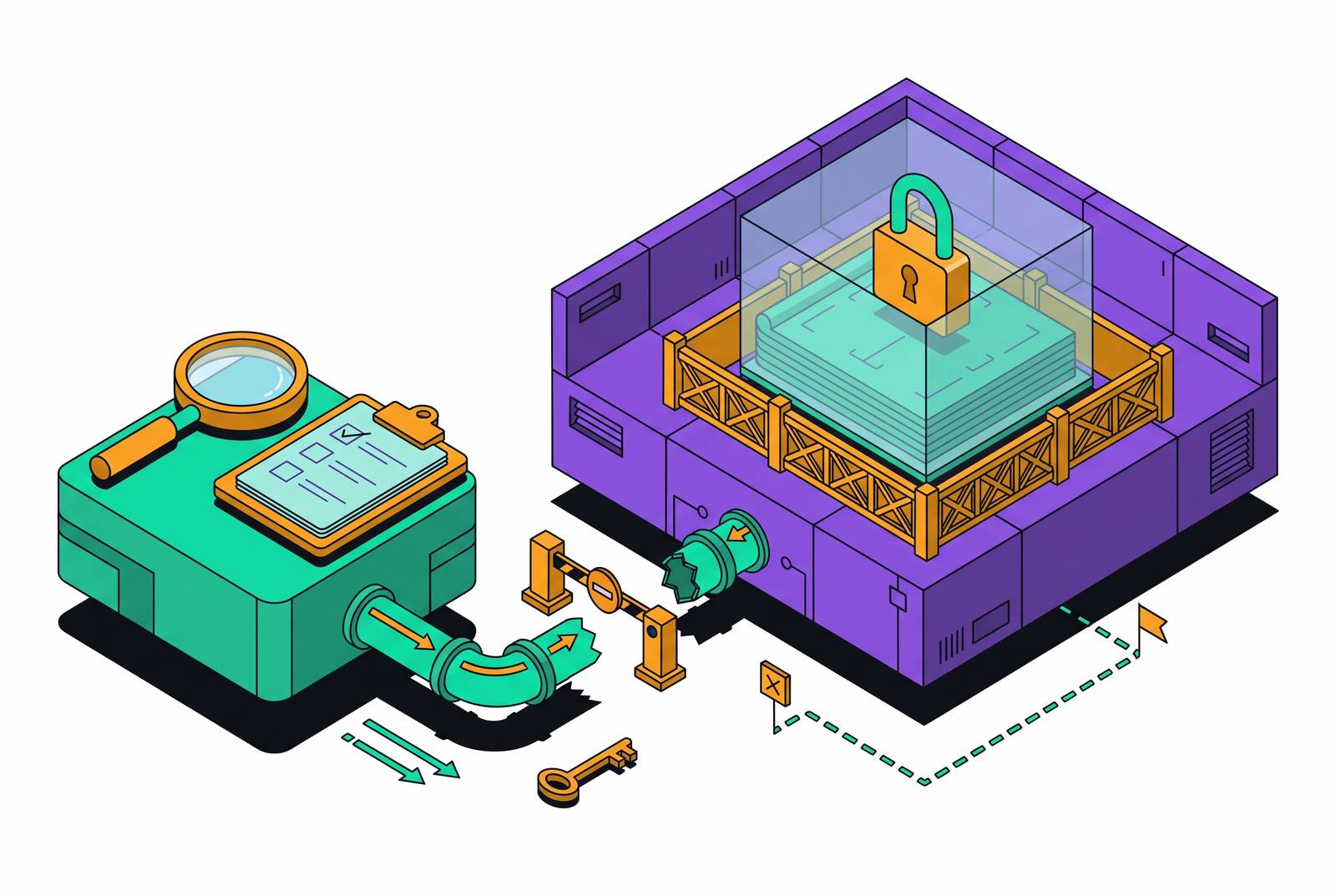
To test integrations against stateful third-party APIs without hitting production, use a stateful simulator that is checked against the live API, and test sequences of operations. Keep schema validation for structural regressions, but use behavioral tests for resource changes, state transitions, and failure recovery. Contract testing alone is not enough because a consumer’s contract cannot make an external provider follow it or stop schema-valid changes in behavior.
What contract testing actually checks and what it deliberately leaves out
A provider renames a response field, a mobile client still reads the old name, and the client breaks because no test watched that boundary. Contract testing puts a machine-readable check at that boundary. Its question is narrow and explicit. Does the interface between two services still match the contract they treat as authoritative. That artifact might be an OpenAPI document, a set of Pact files, or a proto schema.
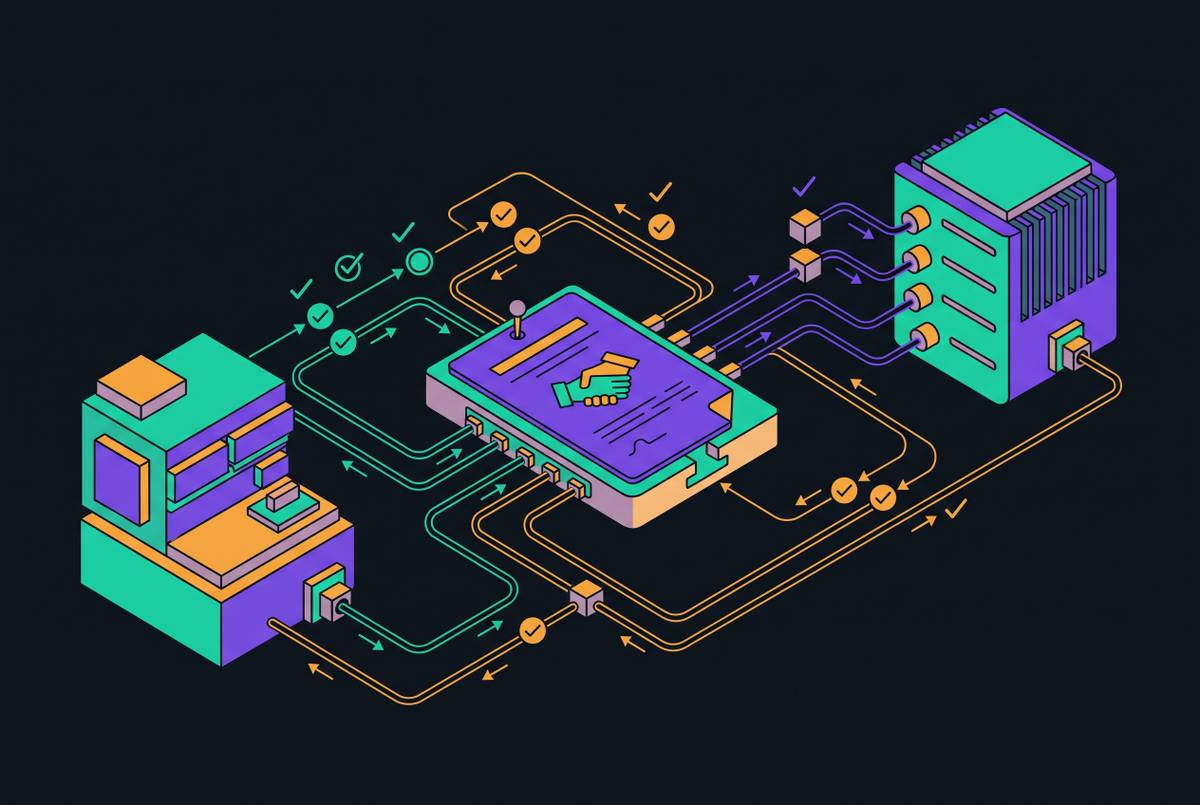
In consumer-driven testing, the consumer records the requests it sends and the response fields it actually reads. The provider then verifies those expectations against its running implementation. Pact’s official documentation describes its approach as “contract by example,” enforced through test cases. The workflow moves from consumer testing to contract generation, contract sharing, and provider verification. The provider’s CI pipeline is the gate that enforces the contract.
Spec-first testing takes a different starting point. Both sides conform to a provider-authored specification. In either approach, interface checks can run quickly and deterministically without exercising the whole system. Establishing that creating an order deducts inventory, that latency stays within bounds, that authorization logic is correct, or that state transitions are valid requires checks beyond the interface. The division of responsibility depends on both parties participating.
The jurisdictional assumption contract testing makes, and why third-party providers break it
The consumer cannot require that provider to receive its contract, run verification, or stop a release when verification fails. A consumer-driven workflow thus faces a jurisdictional gap, losing the gate it needs when the provider never sees the consumer’s Pact file. Better tooling on the consumer’s side cannot grant authority over another organization’s release process.
The distinction changes what a passing test means. A consuming team can record expectations from documentation, build a mock that returns those responses, and test its application against that mock. The result shows that two artifacts under the consumer’s control agree. It does not demonstrate agreement with the external implementation, because the provider has neither acknowledged those expectations nor verified that it satisfies them.
Validating against the provider’s OpenAPI document does not restore that missing relationship. The document remains useful as a description of the interface, but the provider can update it without triggering a consumer-side gate. The implementation can also change while the document remains stale. Both can happen even when there is no structural defect in the consumer’s tests. The failure mode is that those tests pass against a description of behavior the provider no longer exhibits.
How schema contracts miss semantic drift even when structure stays intact
In pagination, a consumer needs more than a page whose fields have the right types. It needs the sequence of page requests to retrieve the intended resources. If pagination behavior changes while the response structure stays intact, schema validation can continue to pass without establishing that the consumer’s traversal still works. The grammar survives while the meaning changes.
Status codes expose the same distinction within a single request. An OpenAPI definition can declare that an endpoint returns a 400, 403, or 200. That list alone does not say which inputs lead to each response or how those responses depend on state. Optional fields leave another gap when a consumer’s business logic needs a field in a given state but the schema allows it to be absent. Polymorphic types widen the range of structurally acceptable responses without proving that the application handles each one correctly.
These limitations remain even when both parties agree on a current schema. A stale specification adds another source of false confidence, because validation then measures conformance to an outdated description as well. A field rename is visible to a structural check. A change in the rules governing a response may not be. Structural fidelity and behavioral fidelity are distinct properties, and schema contract testing measures only the first.
Why stateless mocks cannot fill the gap that schema contracts leave
A stateless mock replaces the live API with a fixed mapping from requests to responses. A GET on a path returns one configured object, while a POST with a matching body returns another. The mock has no memory of earlier requests. That makes it useful for basic, isolated interactions, where the test needs a predictable response.
This falls short when later operations depend on earlier ones. A workflow might receive a hardcoded customer object in one step and a hardcoded subscription object in another. Their apparent consistency comes from the developer’s configuration. The real provider may enforce constraints or mutate state that those responses never represent. Both isolated assertions can pass while the sequence remains untested.
Once a resource is created, it should appear in a list, be retrievable by ID, accept changes that are allowed, and go through valid state transitions. Static responses depict selected outcomes independently of what preceded them. Maintaining those depictions also requires manual changes as the real API evolves, leaving mocks exposed to the same drift as specifications. Service virtualization, or stateful simulation, addresses a different requirement by modeling workflows, dynamic data, and business rules.
How to test stateful APIs without production using verified simulation
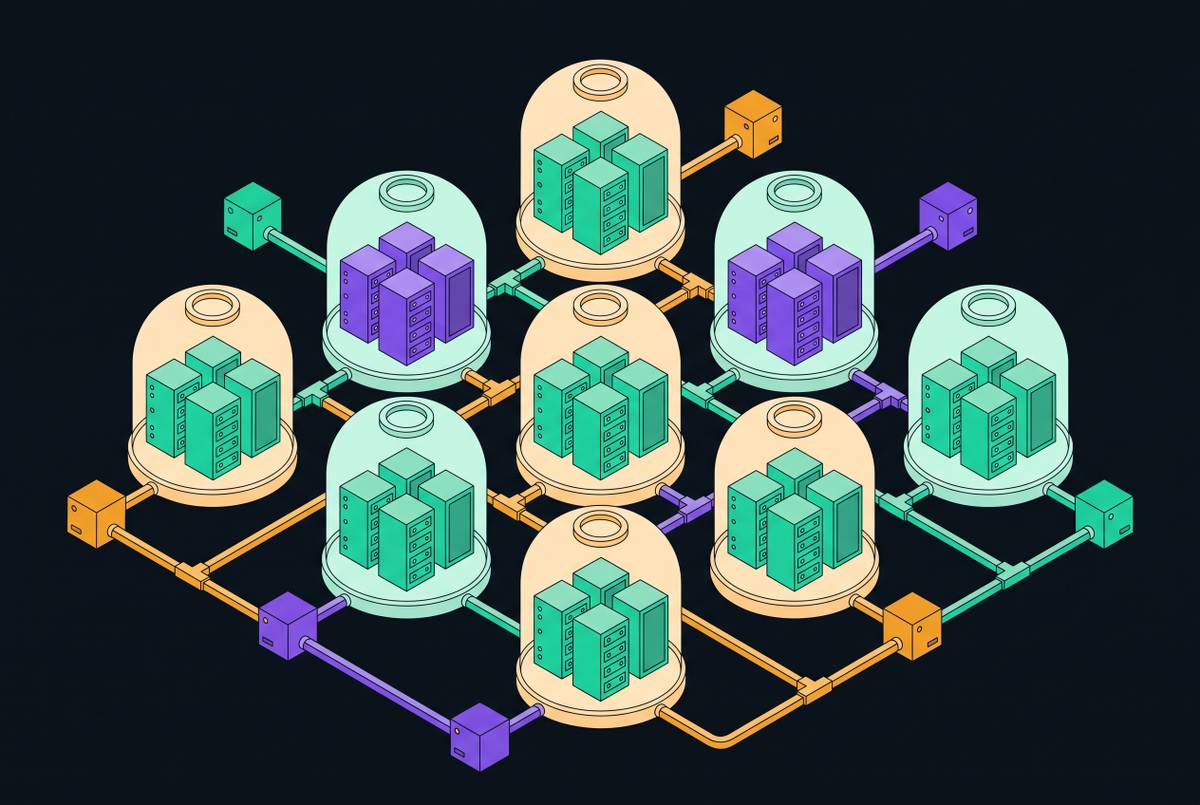
A stateful simulator keeps a consistent world across calls. It stores resources when they are created, updates them when they are changed, and reflects those changes in fetch and list endpoints. Valid state transitions constrain what happens next. Webhook events follow state changes, so a test can examine the relationship between an operation and its later effects.
For example, a test can follow a causal chain by creating a Stripe customer, subscribing that customer to a plan, simulating a failed renewal webhook, and checking the subscription status. Its value depends on the simulator tracking the relevant state as the provider does. Realistic pre-seeded data also lets tests start with the conditions they need, so each test can run without first building its whole world. Deterministic fault injection then makes latency spikes, 429 rate-limit responses, and outages available without coordinating failures with a live provider.
A simulator can maintain an internally consistent world that differs from the real API. Published probe counts show how much has been verified and how deeply each integration has been checked, without suggesting that coverage is complete. Continuous comparison also remains an open problem. The practitioner account in the brief describes fully automated per-API drift monitoring as “isn't there yet” and changes to retry semantics as “closer to catch-and-correct than an automated watchdog.” A verified simulator therefore needs a stated verification basis.
How this plays out in CI pipelines that depend on third-party APIs
Live external dependencies make a pipeline sensitive to conditions beyond the release being tested. Payment gateways and messaging APIs can be unavailable or rate-limited, while shared state introduces variability between runs. These failures erode trust in the suite. Faster contract checks do not remove that dependency, and more static responses do not establish the cumulative behavior of a workflow.
Unit tests belong at pre-commit, with fast, deterministic contract and integration tests at the pull request stage. Security checks also run at the pull request stage, and full regression follows the merge. Within that arrangement, service virtualization replaces external dependencies in the fast stages, while live integration tests remain in a dedicated, infrequent stage. The contract layer retains its structural role rather than being credited with behavioral coverage it does not provide.
A stateful simulator makes rate-limit scenarios, webhook retries, and state-machine coverage repeatable without real credentials or live infrastructure. Controllable state also addresses a different source of flakiness from provider availability. Yet the pipeline must keep failures that show when behavior has changed. Autonomous test repair is counterproductive when it rewrites an API contract test to accept whatever the provider now returns. That change removes the warning without establishing whether the application can tolerate the new behavior.
AI agents calling third-party APIs expose the same gap at higher speed and lower observability
An LLM agent reads an API schema as instructions for tool use. The same organizational boundary remains in place. An agent can produce coherent text while sending malformed or semantically wrong requests to a payment or messaging API.
Behavioral testing must follow the tool-use sequence into the agent’s working state. It needs to check parameter extraction from model output, endpoint selection across calls, and parsing of responses that influence later actions. Standard chaos tools operating at the HTTP, OS, or network level treat response bodies as opaque and cannot alter individual fields. A structurally valid response with wrong content can therefore fall outside the faults those tools inject.
External tool descriptions also introduce an adversarial version of this problem. MCPTox research by Wang et al., 2025, reports a high attack-success rate for tool-description poisoning, where a third-party server’s description has been changed to mislead the agent’s planner. For RL environments, testing must cover millions of interactions whose consequences accumulate across an action sequence. Such environments need deterministic, stateful, horizontally scalable simulation, which neither a live third-party API nor a stateless mock provides.
What a practical testing strategy for third-party integrations actually requires
The practical strategy is to assign each test layer a bounded responsibility. Keep OpenAPI validation in pre-commit for field renames, removed required properties, new required parameters, and narrowed enums. These are structural regressions that schema differences can expose quickly. Treat a passing result as evidence of structural compatibility and parseability. That distinction prevents the fast layer from becoming a substitute for behavioral verification.
Use stateful simulation at the CI integration stage to test operations in their required order. Create a resource, check that list and fetch endpoints reflect it, and exercise the state transitions that govern later operations. Inject webhook retries, 429s, and 503s to test the failure paths as well as the successful sequence. The assertions should connect each action to its consequences. For agents, that includes whether returned data is correctly incorporated into working state before the next tool call.
Check how the simulator has been verified as carefully as what it can do. Published fidelity scores and probe counts should show the extent of comparisons with the provider. Periodic live API smoke tests after deployment can expose behavioral drift that the simulation does not yet cover. When AI training adds large numbers of interactions, determinism and horizontal scalability are also needed. The remaining uncertainty is specific and unavoidable, namely whether the provider has changed behavior outside the simulator’s verified coverage.